Picking a PCB assembly partner is not a decision to make on price alone. The right partner keeps your build moving, catches problems before they reach production, and stands behind the boards they hand back to you. The wrong one costs you far more than the quote ever suggested.
This guide sets out what actually separates a good PCB assembly partner from an average one, and the questions worth asking before you commit to either.
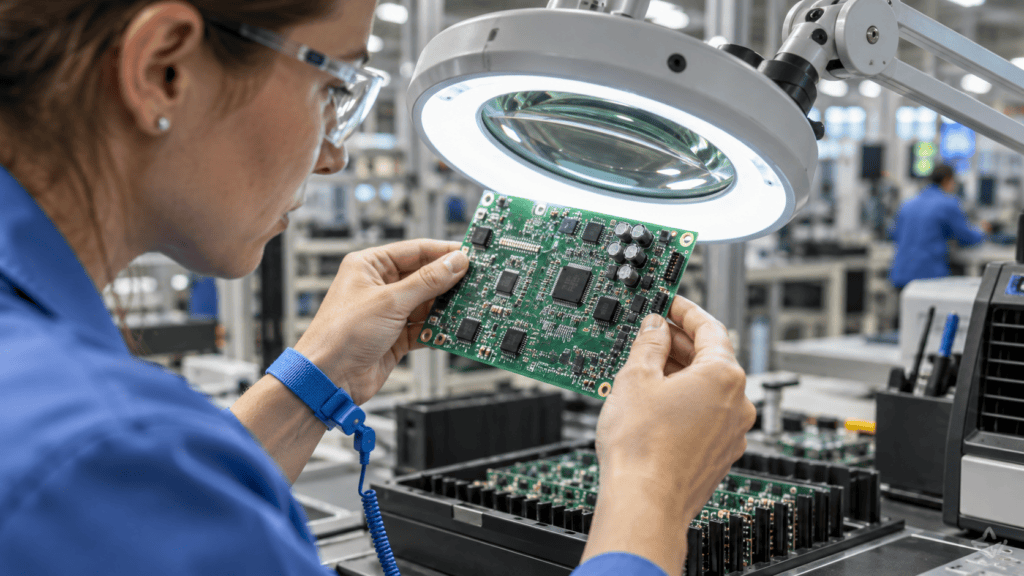
A PCB assembly partner, sometimes called a contract electronics manufacturer or CEM, takes your board design and bill of materials and turns it into a finished, tested assembly. That can mean just the board itself, or it can stretch to the full product: box build, cable assemblies, and final test.
The best partners do more than populate a board. They flag design issues before production starts, manage component sourcing and availability, and carry the quality paperwork that lets you sell into regulated markets with confidence.
It is tempting to choose on unit cost. But a low quote from a partner who cannot hold quality, misses a lead time, or goes quiet when a part goes obsolete will cost you far more in delays, rework, and damaged customer relationships.
A missed lead time on one component can hold up an entire order. A quality escape can mean a product recall. A partner with no forward visibility on component obsolescence can leave you scrambling for parts on a product you expected to build for years. None of these show up on the original quote.
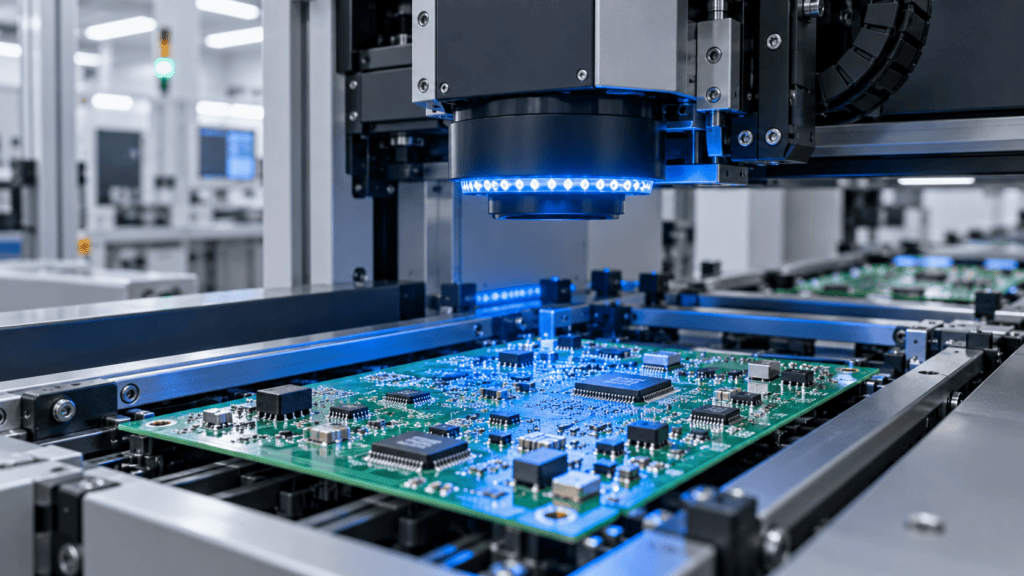
A short conversation with the right questions tells you far more than a glossy brochure. Here is what is worth asking any potential PCB assembly partner.
Certifications are not just a box-ticking exercise. ISO 9001 shows a partner has a structured quality management system. ISO 13485 matters if you are building for medical devices. JOSCAR registration signals a partner has been independently vetted on financial stability, cyber security, and business continuity, which matters most in defence and aerospace supply chains.
Ask whether they offer surface mount and through-hole assembly, box build and integration, cable assemblies, and conformal coating under one roof. A partner who can take a design from bare board to finished, tested product removes handoffs, and every handoff is a place where things can go wrong.
Ask how they track end-of-life notices and rising lead times, and what happens when a part on your board goes obsolete. This matters even more for long-life products. For more on this, see our earlier post on component obsolescence management.
Every build hits a snag eventually. What matters is how a partner responds. Do they have full traceability back to the exact materials and process steps used on your assembly? Can they tell you what happened and fix it quickly, or does it take weeks to even diagnose?
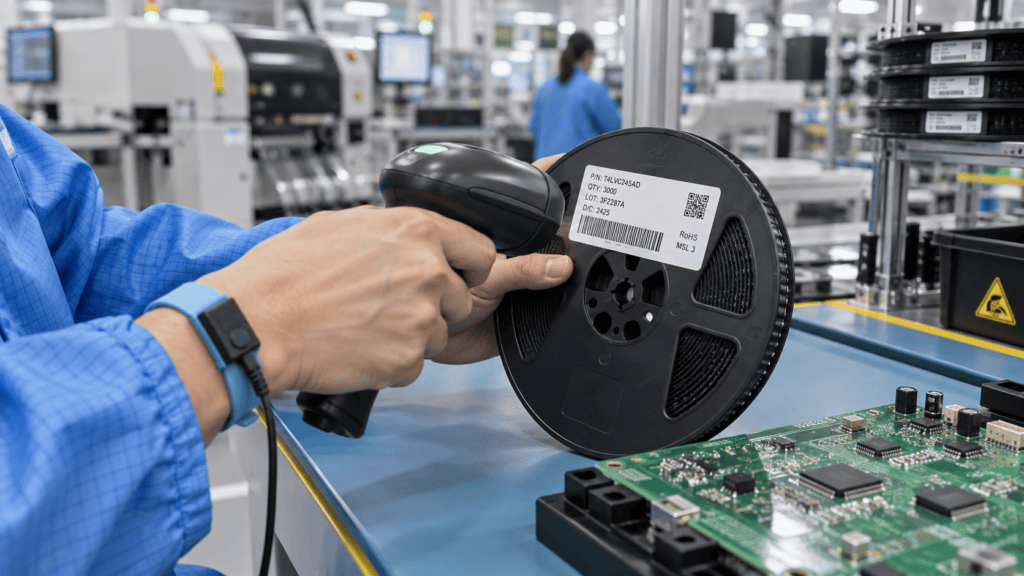
A few warning signs are worth taking seriously during your evaluation. Vague answers about quality certifications. Reluctance to discuss component sourcing or lead times honestly. No clear single point of contact for your account. Pricing that seems too good against everyone else you have spoken to, since that gap has to come from somewhere.
Offshore assembly can look cheaper on paper, but it often comes with longer lead times, higher freight risk, and a harder conversation when something needs fixing quickly. A PCB assembly Scotland partner puts your production close to home, with shorter lead times, easier site visits, and far simpler logistics if a build needs urgent attention.
At Key-Tech, we hold ISO 9001, ISO 13485, and JOSCAR registration, and we work across defence, medical, and marine and subsea sectors where these credentials are non-negotiable. We handle the full build under one roof, from NPI and prototyping through to finished box build, with full traceability on every assembly we produce.
If you are evaluating a new PCB assembly partner, or reviewing whether your current one still fits, get in touch and we will walk through your requirements against this checklist together.
Get in touch with the Key-Tech team
Sean Bissett – Key Account Manager