Medical device electronics manufacturing carries a level of responsibility that few other sectors come close to. When a circuit board ends up inside a patient monitor, an infusion pump or a diagnostic analyser, the stakes are simply higher. A single cold solder joint, or a component nobody can trace, can carry consequences that reach well beyond the production line. For that reason, medical device OEMs look for a partner who treats quality as a daily discipline rather than a box to tick.
At Key-Tech, ISO 13485 certification sits at the heart of how we approach healthcare electronics manufacturing. In this post, we explain what that standard actually means for your project, and why it should shape the way you choose an electronic contract manufacturer.
Most electronics simply need to work. Medical electronics need to work while a clinician, and often a patient, depends on the outcome. As a result, the regulatory scrutiny is heavier, the documentation trail is longer, and product lifecycles can run for a decade or more. A consumer gadget might be forgiven the odd field failure. A medical device rarely is.
This raises the bar across the board. It affects how components are stored and handled, and how every build is recorded and released. In practice, it also means your manufacturing partner needs systems that can stand up to an audit at any moment, not only when an inspector is due.
ISO 13485 is the internationally recognised quality management standard written specifically for the medical device industry. Crucially, holding it is not the same as holding a general quality certificate. It calls for a risk-based approach to every process, tight document control, validated methods, and full traceability from incoming goods through to dispatch.
For the detail straight from the source, you can read the official scope of ISO 13485:2016 on the ISO website.
For you as a customer, the benefit is simple. The processes behind your product have been independently assessed, and they are maintained year after year. As a result, nothing is left to memory or goodwill. Everything is written down, controlled and repeatable. You can also view our current certificates on our quality page.
A strong quality system is only worth having when it sits behind genuine capability. Our medical work covers surface mount and through-hole PCB assembly, conformal coating, system assembly and complete box build, all delivered from our Kirkcaldy facility.
Medical applications also demand control over the details that are easy to overlook elsewhere. Cleanliness, electrostatic discharge protection, controlled soldering profiles and the right coatings all matter when a device may stay in service for years. Because we keep bare board assembly and finished box build on the same site, that control stays consistent at every step, rather than slipping as a product moves between suppliers.
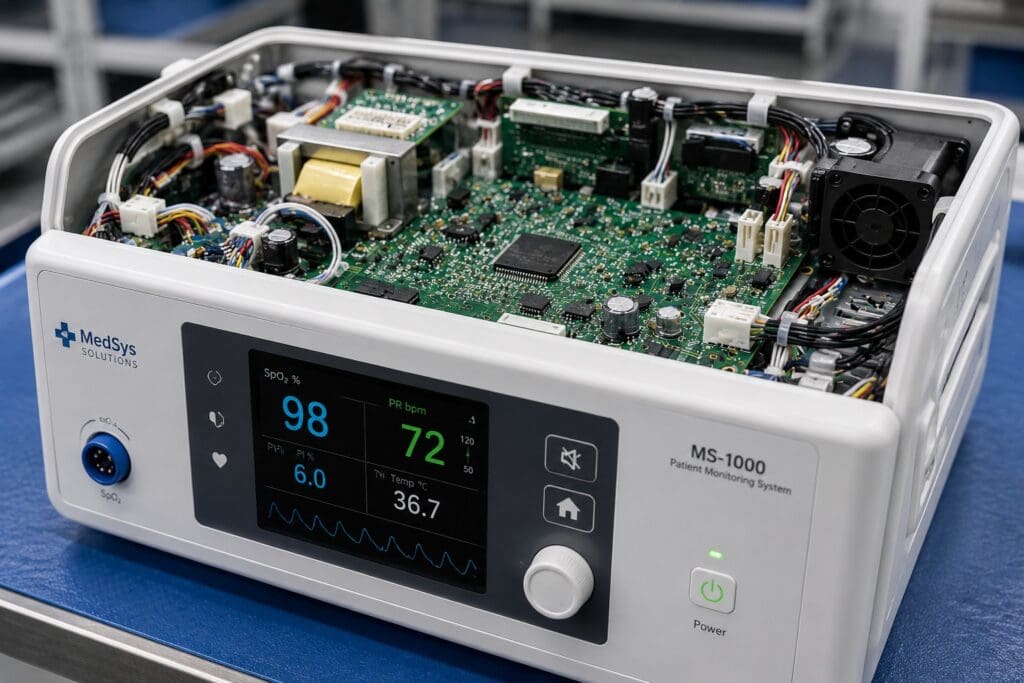
If one thing separates medical manufacturing from the rest, it is traceability. We record which components, from which batches, went into which assemblies. Therefore, any question raised later can be answered with evidence rather than guesswork.
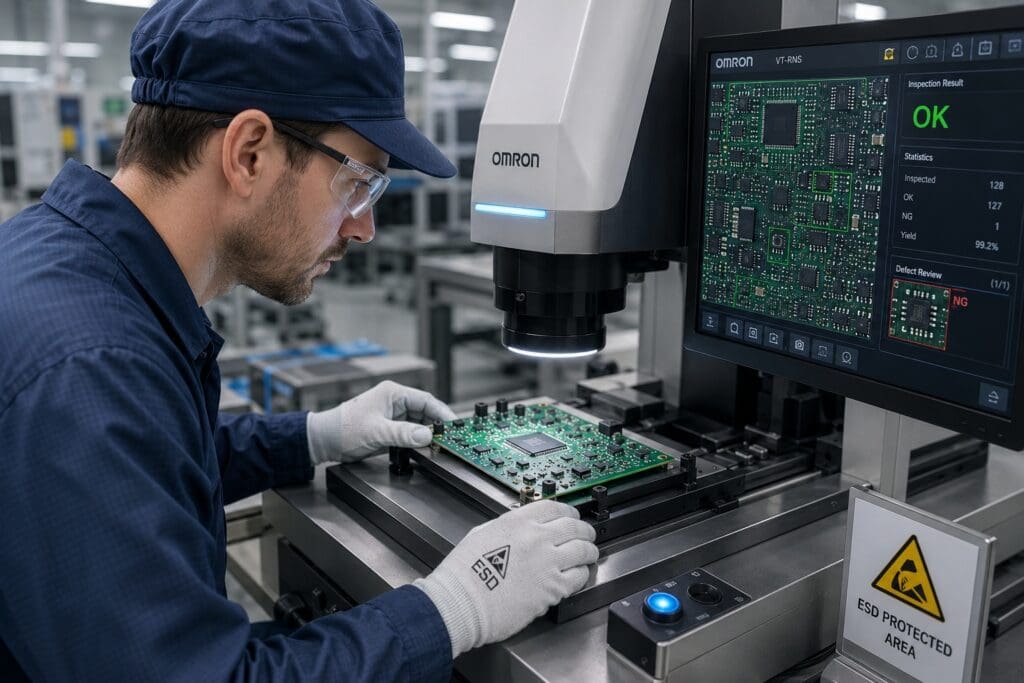
This level of record keeping protects everyone. It supports your own regulatory obligations, it speeds up any investigation if a query arises, and it gives your quality team the paperwork they need without a frantic search. Above all, good documentation is the proof that the product was built exactly as intended.
The earlier quality thinking begins, the cheaper and safer the outcome. We work with customers from the prototype and NPI stage onwards, offering design for manufacture feedback that catches problems before they become costly.
Then, as a project moves towards volume, our processes scale with it. The device you validate as a prototype is the device you receive in production. Risk management runs through all of this. Instead of reacting to issues after they surface, an ISO 13485 system asks you to anticipate them, control them, and record how you have done so. For a medical device, that mindset is not a luxury. It is the job.
When you assess a potential partner, look past the brochure. Ask to see evidence of current certification. Find out how traceability works in practice. Check whether prototype and production sit under the same roof and the same quality system. The answers reveal a great deal about how a partner will handle your project once you place the order.
As an ISO 13485 contract electronics manufacturer, Key-Tech pairs that certification with ISO 9001, a broad set of in-house capabilities, and a team that understands the weight a medical build carries. If you need medical device contract manufacturing in the UK from a partner who takes that responsibility seriously, we would be glad to talk it through.
To discuss your next medical project, get in touch with our team. We are always happy to walk through your requirements and show you exactly how we work.