UK defence spending is rising. Not all of it goes on ships, aircraft and munitions. A growing share goes into electronics. Sensors, communications, guidance, power management and secure data systems now sit at the heart of almost every modern defence platform. That shift is changing who gets to build for defence. It is opening a door that used to be shut to smaller manufacturers.
For years, defence electronics work sat almost entirely with the big primes and their long-standing suppliers. That is changing. Sovereign capability, national resilience and the sheer scale of the work are pushing more of it down the supply chain. Accredited SME manufacturers who can prove they are ready are now getting a real look in.
This is not just about one budget announcement. It is a bigger shift, and it has been building for a while. Here is what is driving it, and what OEMs and primes look for in a manufacturing partner.
Modern defence kit is increasingly software defined. A platform’s value used to sit mostly in its steel, its engine, its armour. Now, more of that value sits in its electronics. Think of the sensors that spot a threat. The systems that share that information. The processing that turns data into a decision. And the power systems that keep it all running in the field.
That trend is not slowing down. As platforms get more connected and more autonomous, the electronics content keeps growing. So does the volume of PCB assembly, box build and cable assembly work that needs a home.
The UK’s Strategic Defence Review set out a clear ambition. Rebuild sovereign capability. Treat defence as an engine for domestic growth, not just a line in the budget. In practice, that means less reliance on single points of failure in the supply chain. It also means more work spread across a wider base of UK manufacturers.
For primes, this is partly about resilience. Long, thin supply chains with few alternative sources are a real risk in a crisis. Spreading work across a broader base of accredited domestic manufacturers, SMEs included, is a practical way to reduce that risk. It beats waiting years for one large facility to scale up.
There is also a simple capacity problem. Programme timelines are demanding. Order books are already outpacing what the largest primes can deliver alone. Somebody must build the volume. Increasingly, that somebody is a well-run, well accredited SME.
Being a smaller manufacturer does not disqualify you from defence work. What disqualifies you is Being a smaller manufacturer does not rule you out of defence work. What rules you out is being unable to prove you can be trusted with it. Defence procurement teams work in a heavily regulated, security conscious world. They need answers to a few key questions before they place an order.
These are not new questions. What has changed is how many manufacturers are now being asked them. And how much real work is on offer to those who answer well. Read more about our approach to defence electronics manufacturing on our website.
This is where JOSCAR registration earns its keep. JOSCAR lets defence and aerospace buyers check a supplier’s financial stability, cyber security, data protection, quality management and business continuity. They can do this before a single conversation takes place. For a busy procurement team, that is a useful shortcut. For a manufacturer, it is a way to be found, rather than overlooked.

ISO 9001 does similar work for quality management. So does ISO 13485, where medical or safety critical work crosses over. None of these accreditations guarantee a contract on their own. What they do is earn you a seat at the table. That is the part smaller manufacturers have always found hardest to reach.
Defence products have long lives. A system built today might still be in front line service in the 2040s. That means the manufacturer behind it needs to keep answering questions about it for decades.
That takes real traceability, not a paper trail stitched together after the fact. Every component, every process step and every test result need to be on record and easy to pull up. It also takes a manufacturing partner who takes obsolescence seriously. That means sourcing alternative parts as originals go out of production. It means keeping a programme alive long after its original components have disappeared from the market.
Key-Tech is a JOSCAR registered defence electronics manufacturer and an official ADS Group member. We work from a 46,000 sq ft facility in Kirkcaldy, Fife. We hold ISO 9001 and ISO 13485 quality accreditations. Every build we produce is fully traceable, from PCB assembly through to full box build and conformal coating. We can trace it back to the parts and process steps involved
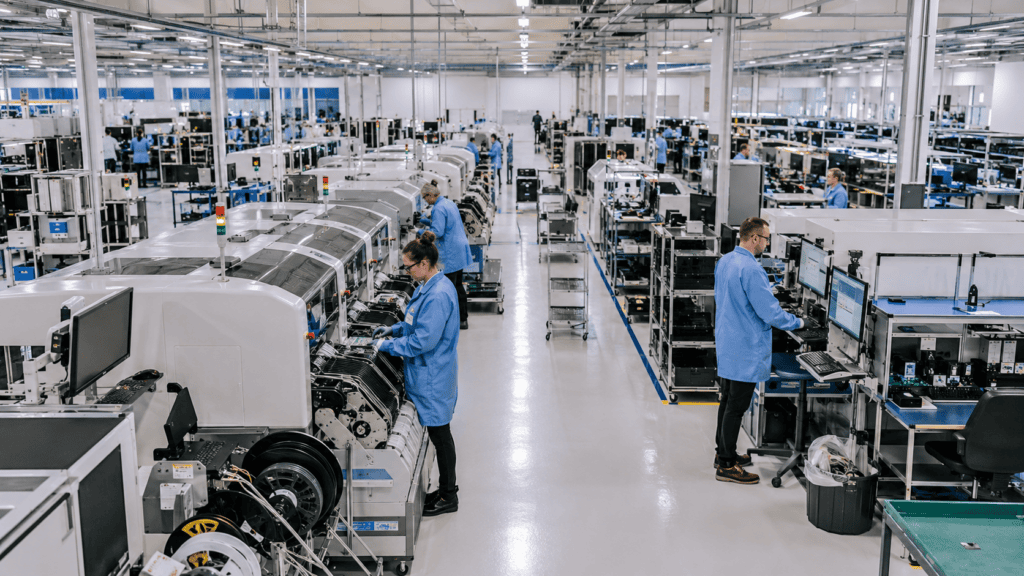
We work across the full range of volumes that defence programmes need. Qualification and prototype builds. Low and medium volume production runs. Long term support for products that need to stay in service, and in supply, for years to come. We also maintain secure areas within our facility and can work under NDA where a project demands it.
None of that happened by chance. It reflects a deliberate choice. We wanted to build a manufacturing partner that a defence procurement team can assess quickly and trust readily. One they can rely on for the long haul.
Growing defence investment may be changing your own sourcing strategy. Perhaps you are a prime looking to diversify your supply chain. Perhaps you are an SME trying to work out where you fit in. Either way, it is worth having that conversation early, before a programme timeline forces the decision.
Get in touch with our team to talk through your requirements. Or take a look at what we do for the defence sector.