Getting a PCB assembly quote should be simple. You send your files, the manufacturer prices the job and a number comes back. In practice, though, quotes often stall. A missing file or a vague part number can add days of back and forth before you see a price.
The good news is that most delays are easy to avoid. When you send the right information first time, you get a faster PCB assembly quote. You also get a more accurate one, because the manufacturer has nothing left to guess.
In this guide we cover exactly what to send with your bill of materials (BOM). We also explain what drives the cost of PCB assembly, and the common mistakes that slow a quote down.
A quick price is useful. However, a price built on guesswork can cause trouble later. If your manufacturer has to assume a part value or a test step, the figure may change once the real details come out.
That leads to awkward conversations, revised budgets and late builds. An accurate PCB assembly quote, on the other hand, gives you a number you can plan around. It also shows the manufacturer has properly understood your product.
Clear files help in another way too. They let the engineering team spot problems early, such as an obsolete part or a footprint that will not build well. As a result, you avoid surprises once production starts.
Every manufacturer works a little differently. Even so, almost every contract electronics manufacturer needs the same core files and details to prepare a PCB assembly quote.
The BOM sits at the heart of any quote. It lists every part on the board, how many of each you need and where each one goes. A good BOM gives the manufacturer part number (MPN), the manufacturer name, the quantity per board and the reference designators. Send it as a spreadsheet, such as Excel or CSV, rather than a PDF. That way the purchasing team can load it straight into their system.
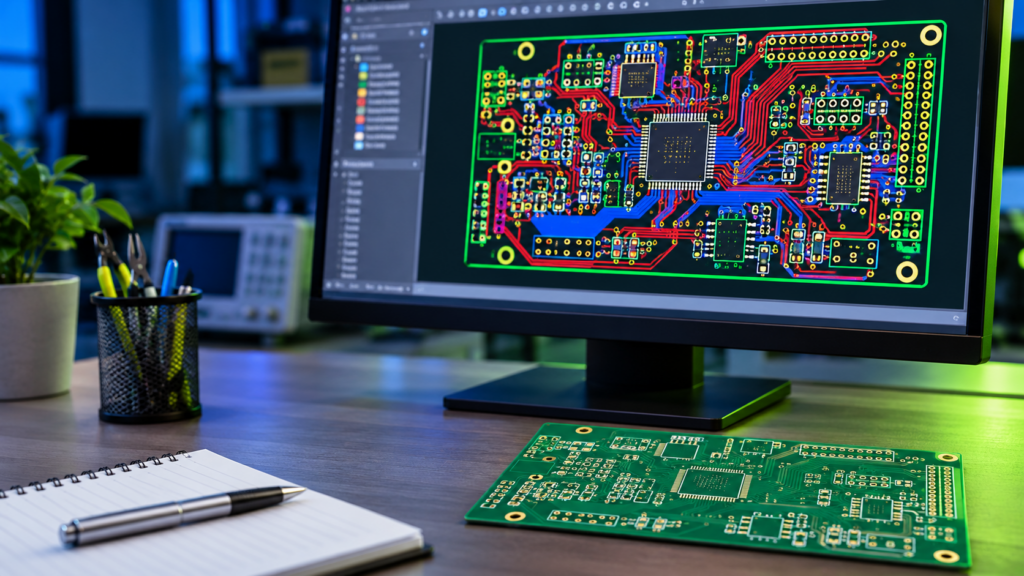
Gerber files describe the bare board itself, layer by layer. They show the copper, solder mask, silkscreen and drill data. The Gerber format is the industry standard, so most design tools export it in a few clicks. If you add the board stack-up and surface finish, the team can price the bare board at the same time.
This file, sometimes called a centroid file, tells the assembly machines where each part sits. It gives the X and Y position, rotation and board side for every component. Without it, someone has to build that data by hand, which adds time and cost.
Drawings show anything the data files cannot. For example, they might cover polarity marks, parts that stay unfitted, or how a connector should sit. They also help with through-hole parts and any hand assembly.
Price changes with volume, so tell the manufacturer how many boards you need. If you expect to reorder, share your yearly forecast too. It is also worth giving a target date, because a rushed build often costs more than a planned one.
Next, explain how you want the boards checked. Do they need full functional testing, or will standard AOI do? Our guide to PCB inspection and test explains the options. Also mention whether the boards need conformal coating or will go into a box build. Each step affects the price, so it pays to raise them early.
A tidy BOM saves more time than anything else. Before you send yours, run through this quick checklist.
Approved alternatives matter more than ever right now. Component lead times still move around, as we covered in our look at the electronics supply chain. A second option keeps your build on track when the first choice runs short. Likewise, if a part is near the end of its life, our post on component obsolescence explains how to plan ahead.
Once your files arrive, the manufacturer prices the job. A handful of factors make the biggest difference to the final figure.
Knowing these factors helps you compare each PCB assembly quote fairly. A cheap quote that leaves out testing, for instance, is not really cheaper. Our buyer’s guide has more on how to weigh up a PCB assembly partner.
Most solder defects begin at the printing stage. Solder paste inspection measures the paste on each pad before the machines place any parts. Too much paste can cause bridges. On the other hand, too little can leave weak joints. Catching it here is far cheaper than reworking it later.
Most quote delays come from the same few issues. Thankfully, all of them are easy to fix.
A line that reads “100nF capacitor” could match hundreds of parts. Without an exact MPN, the purchasing team has to come back and ask.
Sometimes the BOM shows one revision while the Gerbers show another. So before you send anything, check that every file belongs to the same version of the board.
Ten prototypes and 5,000 production boards need very different quotes. Therefore, always state the volumes you need and when you need them.
If nobody mentions testing, the quote may leave it out. Adding it back in later can then change both the price and the lead time.
At Key-Tech, we want your PCB assembly quote to be as simple as possible. You can upload your BOM using the button at the top of any page on our site. Our team then reviews your files and comes back to you with any questions.
We also offer a free design for manufacture review as part of our NPI and prototyping service. In other words, our engineers check your design for problems before you commit to production. That gives you one more reason to trust the numbers in your quote.
From our 46,000 sq ft facility in Kirkcaldy, Fife, we build for defence, medical, rail, marine and subsea, energy and engineering. We hold ISO 9001 and ISO 13485 certification, along with JOSCAR registration. See our quality page for the full details.
If you have a new product ready to build, we would be glad to price it. Upload your BOM using the button at the top of the page, or get in touch and we will talk it through.